
A bathroom remodel is one of the more personal decisions you’ll make in your home, shaping a space you use every single day.
One of the first choices you’ll face is the overall design direction: a traditional aesthetic built around softness and warmth, or a modern approach defined by clean lines and confident contrast. Neither is right or wrong. The better fit depends on how you want the space to feel.
What Makes a Traditional Luxury Bathroom?
A traditional bathroom remodel leans on softer colors, gentle curves, and a sense of established elegance. Palettes tend toward warm neutrals, muted blues and greens, and finishes that feel collected over time rather than assembled all at once. Cabinetry often includes raised panels and detailed molding, while fixtures favor rounded silhouettes over sharp geometry.
Fluidity is central to this style. A traditional bathroom often uses curved vanity edges, arched mirrors, and freestanding tubs with graceful lines. If you’re drawn to this direction, expect a room that feels timeless, layered, and quietly luxurious rather than dramatic.
Lighting choices reinforce that mood. Traditional bathrooms tend toward warmer light temperatures and fixtures with classic detailing, sconces with fabric or glass shades, a chandelier over a soaking tub, elements that add texture without competing with the room’s overall softness.
What Defines a Modern Luxury Bathroom?
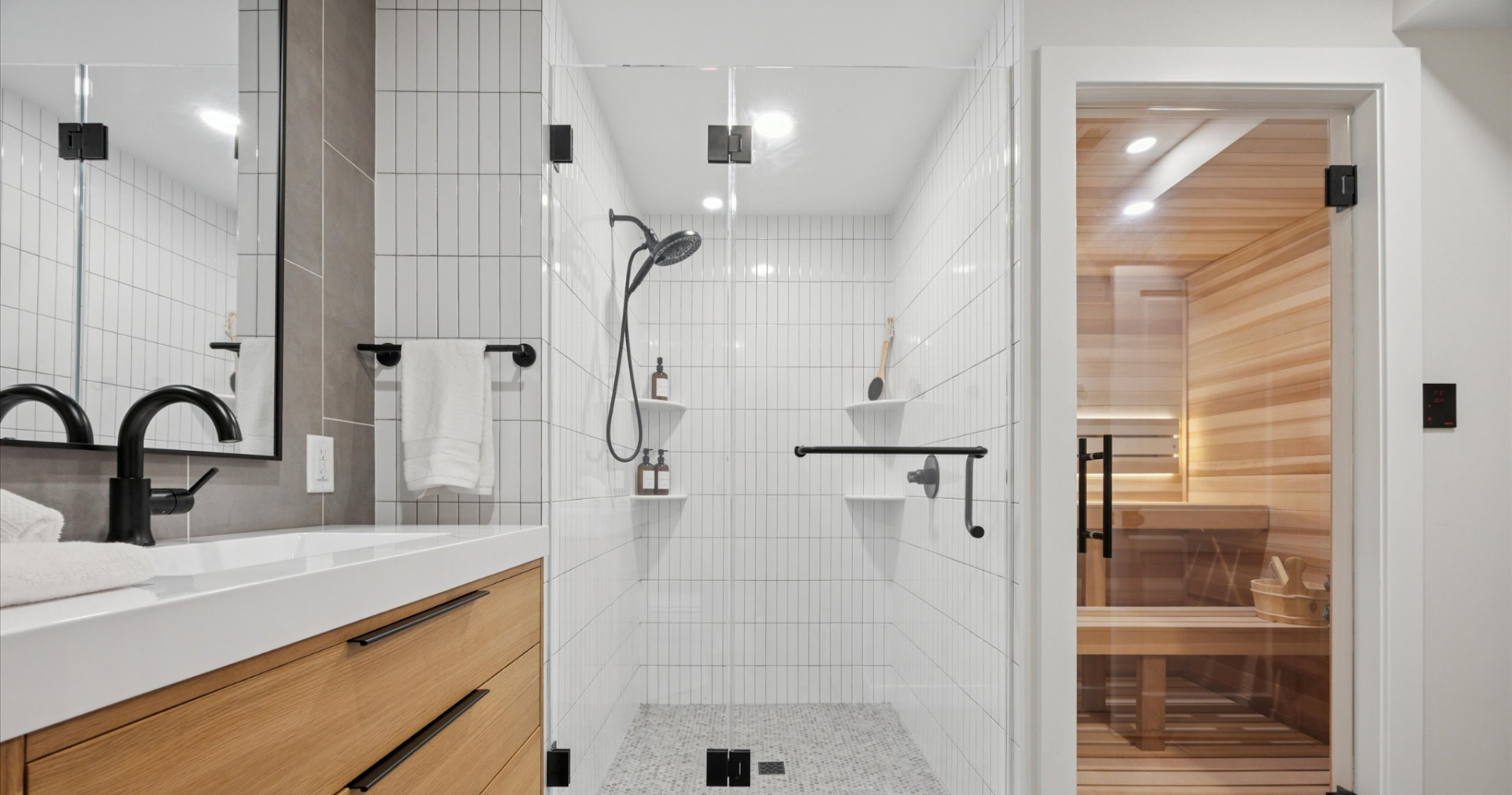
Modern bathroom remodeling and design takes the opposite approach, favoring clean lines, minimal ornamentation, and bold decisions that create visual impact. Cabinetry tends toward flat panels and hidden hardware, letting material and form speak for themselves. Countertops and tile often feature dramatic veining or a single striking material used with intention throughout the space.
Color plays a different role here. Where traditional design softens contrast, a modern bathroom often uses it deliberately, a dark vanity against light walls, a bold accent tile in a shower niche, matte black fixtures set against bright white surfaces. If this style appeals to you, expect a room that feels confident and architectural.
Geometry replaces ornamentation as the primary design tool. Rectangular soaking tubs, linear drains, and floating vanities create clean sightlines, while large-format tile minimizes grout lines for an even more streamlined look.
Where the Two Styles Can Overlap
Your space doesn’t have to fall entirely into one category or the other, or fit every bathroom remodeling trend.
You might want the warmth of traditional materials with the clean layout of a modern floor plan, or a mostly modern space with one traditional focal point, like a vintage-inspired freestanding tub. Windle’s designers work with you to find that balance rather than forcing a strict either-or choice.
Traditional vs. Modern Bathroom Design: Which Will Fit Your Home?
The right starting point is how you want to feel in the space. If you’re drawn to a calm, layered retreat that echoes the rest of an older or more traditional home, you’ll likely gravitate toward softer colors and fluid design elements. If you want your bathroom to feel current, architectural, and distinct from the rest of the house, you may lean toward the clarity of a modern approach.
Your home’s existing architecture also plays a role. A bathroom in a home with classic proportions and detailed trim work often flows more naturally when its design echoes that character. A home with more contemporary bones may support a bolder, more modern direction without feeling out of place.
Thinking Beyond the Trend Cycle
Bathroom trends shift, but the underlying question of comfort and daily use doesn’t.
If you plan to stay in your home for many years, you’ll benefit from choosing a direction that reflects your genuine taste rather than what’s currently popular. Both traditional and modern luxury bathrooms can feel timeless when the choice comes from a clear sense of what you actually want to live with.
How Do Fixtures and Materials Reinforce Each Style?
Fixture choice plays a defining role in whether your bathroom reads as traditional or modern. Traditional spaces often favor polished nickel, brass, or bronze finishes with detailed faucet handles and classic silhouettes. Modern spaces tend toward matte black, brushed gold, or unlacquered brass in cleaner, more minimal forms, with single-lever fixtures replacing separate hot and cold handles.
Countertop and tile choices follow a similar pattern. If you’re leaning traditional, marble with soft veining, subway tile, or hexagonal patterns tend to feel established and familiar. If you’re leaning modern, large-format porcelain or quartz surfaces, bold veining used as a statement rather than a backdrop, and tile laid in clean, uninterrupted expanses will likely suit you better.
Cabinetry and Storage Choices
Cabinetry style ties the whole room together. A traditional vanity often includes furniture-style legs, raised panel doors, and decorative hardware that echoes the rest of your home’s millwork. A modern vanity favors flat-front cabinetry, integrated pulls or push-to-open mechanisms, and floating installations that create a sense of openness beneath the sink.
Should You Consider How the Bathroom Connects to the Rest of Your Home?
Your bathroom rarely exists in complete isolation from the rest of your house. If you live in a traditional home with detailed trim, wood tones, and classic proportions, you’ll often benefit from a bathroom that continues that visual language rather than breaking from it abruptly.
A dramatic modern bathroom inside an otherwise traditional home can still work, but it benefits from a deliberate transition, whether through a hallway that shifts in tone or a shared material that bridges the two spaces.
If your home has more contemporary architecture, you can generally support a modern bathroom without needing that transition, since the rest of the house already speaks the same design language. Windle’s designers consider this connection as part of your overall remodel, so the finished bathroom feels intentional within your home rather than disconnected from it.
Finding the Right Fit for Your Space
Choosing between traditional and modern isn’t about picking a side. It’s about understanding what each style offers and matching that to how you want your bathroom to look, feel, and function for years to come.
The Windle Design & Construction guides you through this decision as part of the full design and build process, helping translate your general sense of style into a finished bathroom that feels distinctly yours. If you’re weighing traditional against modern for your own remodel, reach out to the team today.