
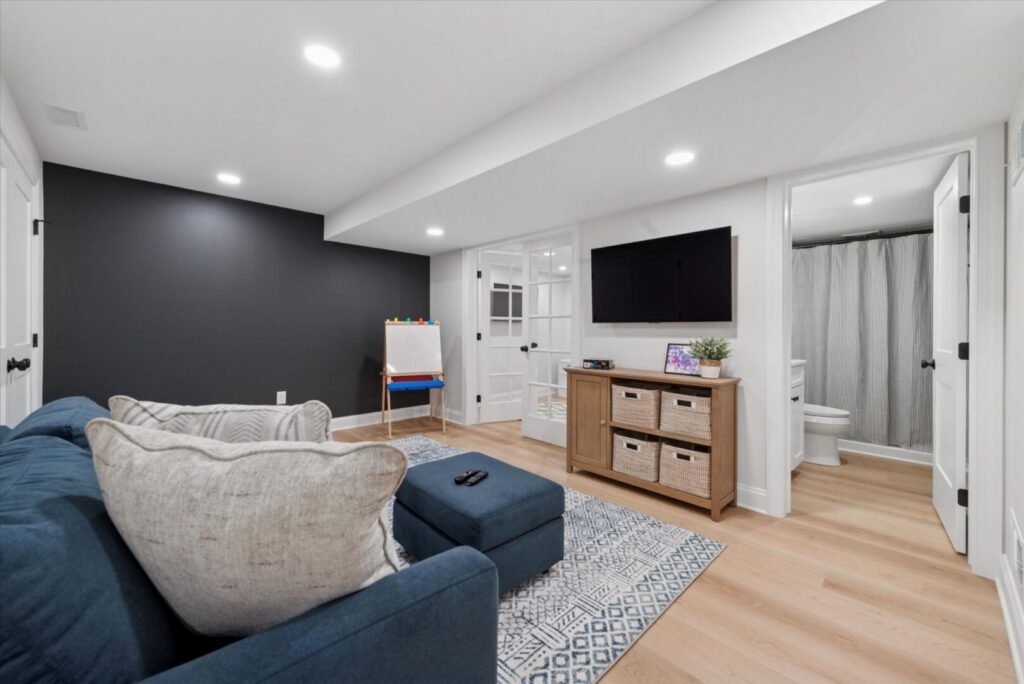
A basement with low ceilings can still feel comfortable, polished, and beautifully designed. The key is working with the space instead of fighting against it. When the layout, lighting, materials, and finishes are planned carefully, a lower basement can feel open, inviting, and connected to the rest of your home.
At Windle Design & Construction, we look at basement remodeling through both a design and construction lens. For basements with limited ceiling height, that matters. Every inch counts, and every detail should work together.
Here are our favorite low ceiling basement remodeling ideas.
What Lighting Works Best for Low Basement Ceilings?
Lighting is one of the most important parts of remodeling a basement with low ceilings. Since hanging fixtures can get in the way, the lighting plan needs to be sleek, practical, and tied to how each area will be used.
Use Recessed Lighting Carefully
Recessed lighting is often a smart choice because it doesn’t take up headroom. It can brighten the room without adding visual clutter to the ceiling, which makes it one of our favorite basement remodeling ideas for low ceilings.
Placement matters. Too many recessed lights can make the ceiling feel busy, and too few can leave the room feeling dim. A thoughtful layout should account for seating, walkways, built-ins, bars, desks, wellness areas, and activity spaces.
Warm lighting often feels more comfortable in a luxury basement. It gives the space a softer look, especially in rooms designed for relaxing, gathering, or winding down at the end of the day.
Bring Light to the Walls
Wall sconces, shelf lighting, and under-cabinet lighting can add depth without lowering the ceiling. These details help the room feel more layered and less flat.
Accent lighting can highlight built-ins, artwork, stone, tile, a bar, or a wellness nook. Small lighting details can make a big difference because they add warmth and help the room feel thoughtfully finished.
How Can Wellness Features Fit Into a Low-Ceiling Basement?
A lower level can be an excellent place for quieter routines. When wellness areas are planned early, they can feel like a natural part of the home instead of an add-on.
For clients interested in holistic care at home, a basement can include space for stretching, recovery routines, skin care, post-workout rest, or a calm transition between the busy parts of the day.
Make Room for Holistic Care Routines
Holistic care means different things for each household. For one family, it might mean a quiet yoga area near a bathroom. For another, it might mean a compact recovery room with built-in storage for towels, mats, robes, and personal items.
In a low-ceiling basement, the wellness area should feel open and calm. Soft lighting, simple materials, clean storage, and comfortable flooring can help the room feel restful without adding visual weight.
Plan Saunas and Red Light Therapy Areas Thoughtfully
A sauna or red light therapy area needs careful planning around clearances, materials, ventilation, power, and privacy. In low-ceiling basements, placement is especially important because the feature should feel comfortable without weighing down the room.
A compact sauna can be designed into the edge of the layout, near a bathroom, gym, or wellness nook. Red light therapy equipment can be located in a quiet alcove with storage nearby, giving the space a polished and intentional feel.
Can a Low-Ceiling Basement Include a Bar or Fully Functioning Kitchen?
Some of the most useful finished basements are designed for gathering. A bar or basement kitchen can make the room more comfortable for parties, guest visits, movie nights, and everyday family time.
The right design depends on how you plan to use the space. A casual bar, beverage center, kitchenette, or fully functioning kitchen can all work in a low-ceiling basement when scale, circulation, and storage are planned together.
Design a Bar That Fits the Room
A basement bar doesn’t need to feel large to feel luxurious. A clean run of cabinetry, stone or tile, under-cabinet lighting, beverage refrigeration, and thoughtful shelving can create a refined gathering spot without crowding the room.
In low-ceiling basements, we often keep upper details lighter and use lower cabinetry to ground the design. This gives the bar presence without pulling attention to the ceiling height.
Plan a Fully Functioning Kitchen With Clean Sightlines
A fully functioning basement kitchen can be helpful for long visits, guest suites, game nights, and entertaining. The design might include refrigeration, a sink, dishwasher, storage, countertop surfaces, and space for serving.
In a low-ceiling basement, flush details, low-profile fixtures, and continuous cabinetry can keep the kitchen from feeling busy. Planned this way, the kitchen feels built into the architecture instead of placed into the room afterward.
How Can You Create Divided Spaces in the Basement?
A basement can serve kids and adults without feeling split down the middle. Creating divided spaces within the basement comes down to thoughtful zones, not heavy walls.
This is one of the reasons a finished basement needs careful planning. The layout should give each area a purpose, yet still feel cohesive when you see the whole room.
Define Kids’ and Adults’ Areas Without Closing the Room
A kids’ area might include room for games, crafts, homework, toys, or movie nights. An adults’ area might include a bar, lounge, media space, workout area, or wellness feature.
The two can live in the same basement when transitions are handled carefully. Furniture placement, rugs, lighting, cabinetry, and partial-height features can create clear zones without making the ceiling feel lower.
Use Partial Dividers, Built-Ins, and Furniture
Partial walls, open shelving, columns, banquettes, and built-ins can divide a basement without closing it off. These pieces can also add storage, display space, and architectural detail.
A column can be worked into a shelving unit or bar. A long built-in can separate a play area from a lounge. A low cabinet can hold toys on one side and serving pieces on the other, giving the basement flexibility without visual clutter.
What Built-Ins Work Best in a Basement With Low Ceilings?
Built-ins are especially useful in low-ceiling basements because they add storage without taking over the room. They can also help irregular basement features feel more intentional.
Custom built-ins are often the best choice because they can be designed around columns, beams, ducts, access points, and the specific way your family uses the space.
Use Low, Horizontal Storage
Low built-ins can provide storage and structure without making the room feel crowded. A long media cabinet, storage bench, or low shelving wall can give the room a tailored look.
Horizontal lines can also make the space feel wider. This works well in media rooms, family rooms, play areas, bars, and lounge spaces.
Work Around Structural Details
Finished basements often include columns, beams, ducts, and access points that need to be included in the design. Custom cabinetry and millwork can help these features feel intentional.
A soffit can line up with cabinetry or help define a seating area. A structural post can be built into a divider, snack counter, or display wall. These details are easier to solve when the design and construction teams plan together.
What Ceiling Treatments Work for a Finished Basement?
The ceiling is one of the most important design decisions in a low basement. It needs to handle structure, lighting, and mechanical systems and preserve as much height as possible.
Plan Soffits Carefully
Soffits are sometimes needed to conceal ductwork, pipes, or beams. In a low-ceiling basement, they should be used carefully and placed where they make sense within the broader layout.
A soffit can help frame a bar, define a seating area, or create a transition between zones. When it lines up with cabinetry or a natural change in function, it feels more like part of the design.
Consider an Exposed Ceiling
A painted exposed ceiling can preserve headroom and add a more relaxed architectural look. This option can work well in the right basement.
It isn’t right for every space. The ceiling layout, mechanical systems, and overall style all need to be considered. When finished carefully, an exposed ceiling can feel stylish and intentional without sacrificing height.
Why Choose a Design-Build Team for a Low-Ceiling Basement Remodel?
Basements with low ceilings call for careful coordination. The design needs to look beautiful, but it also needs to work around structure, utilities, moisture concerns, lighting, and building requirements.
A design-build team brings those pieces together from the start. At Windle Design & Construction, our designers and builders collaborate closely so the plan is both refined and practical.
Design Choices Are Connected to Construction
In a low basement, each decision affects the next. Flooring thickness, lighting placement, ceiling treatments, cabinetry, ductwork, wellness features, and layout all need to work together.
When design and construction are handled under one roof, those details can be reviewed early. This helps reduce surprises and keeps the finished space close to the original vision.
The Basement Feels Like Part of the Home
A finished basement should feel connected to the rest of your home. The trim, materials, lighting, cabinetry, and layout should all reflect the same level of care.
That kind of cohesion doesn’t happen by accident in a low-ceiling basement remodel. It takes planning, craftsmanship, and a clear design direction shaped around your home and your lifestyle.
Create a Basement That Works Beautifully for the Way You Live
A low ceiling doesn’t have to limit what your basement can be. With thoughtful design, careful construction planning, and the right materials, the space can feel stylish, comfortable, and beautifully finished.
Windle Design & Construction helps you look at your basement with a fresh perspective. We consider how the room should function, how it should feel, and how every design choice can work within the existing structure.
If you’re ready to remodel a basement with low ceilings, contact Windle Design & Construction to start planning a finished space that feels intentional, refined, and built for the way you live.